Research

Molecular mechanisms in health,
disease & drug action

We investigate how biological systems change in health, disease, and response to therapeutic and chemical perturbations. Our research combines proteomics, metabolomics, systems biology, molecular biochemistry, mass spectrometry, bioinformatics, molecular modelling, and data-driven computational approaches to connect molecular measurements with biological mechanisms.

Rather than treating these methods as separate research areas, we integrate them across different biological questions: characterizing molecular states, understanding how disease and drugs perturb biological systems, and developing computational and molecular models that help explain the resulting changes.

Proteomics · Metabolomics · Multi-omics · Systems Biology · Mass Spectrometry · Bioinformatics · Molecular Modelling · AI

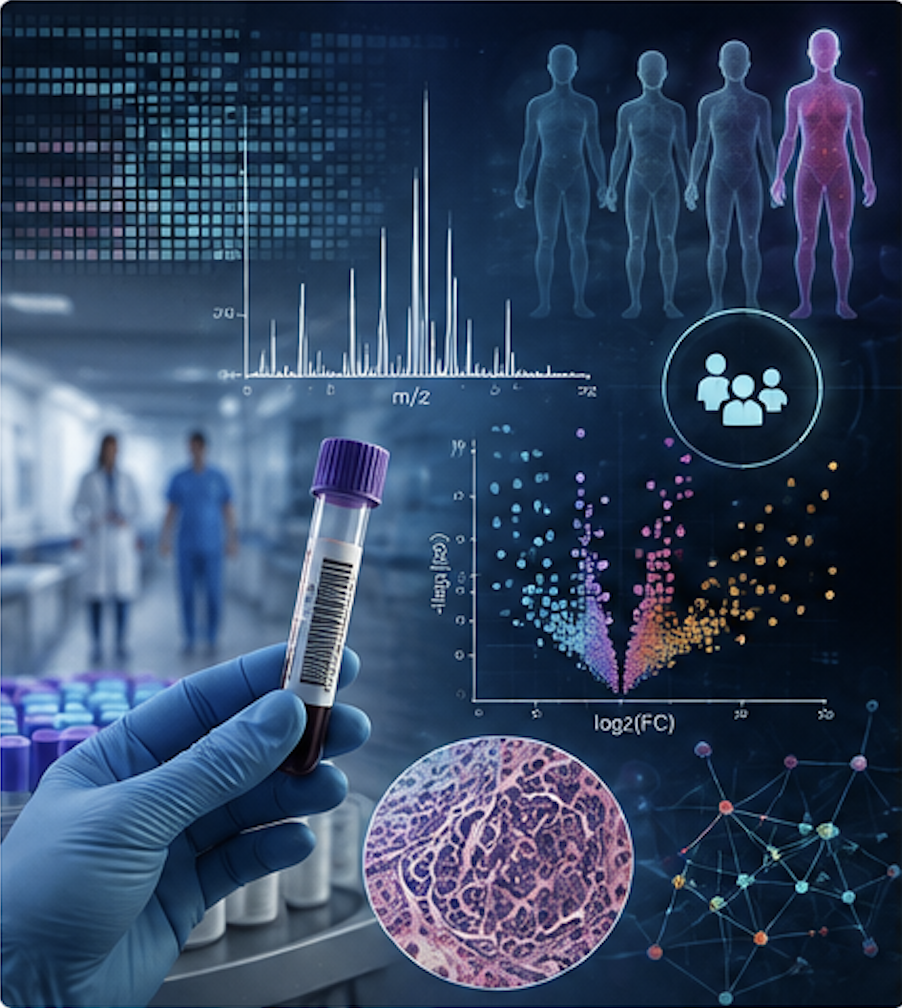
MeasureOmics & Systems BiologyMeasure and organize molecular change
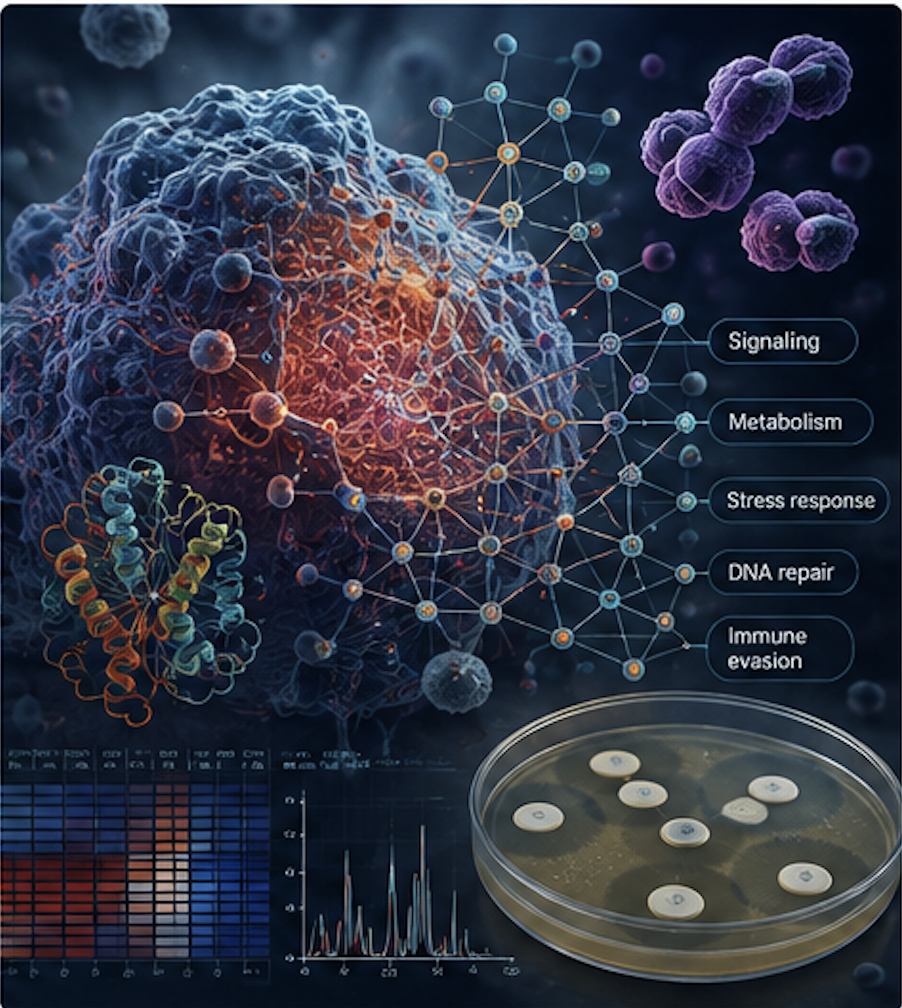
ExplainMolecular MechanismsExplain biological response
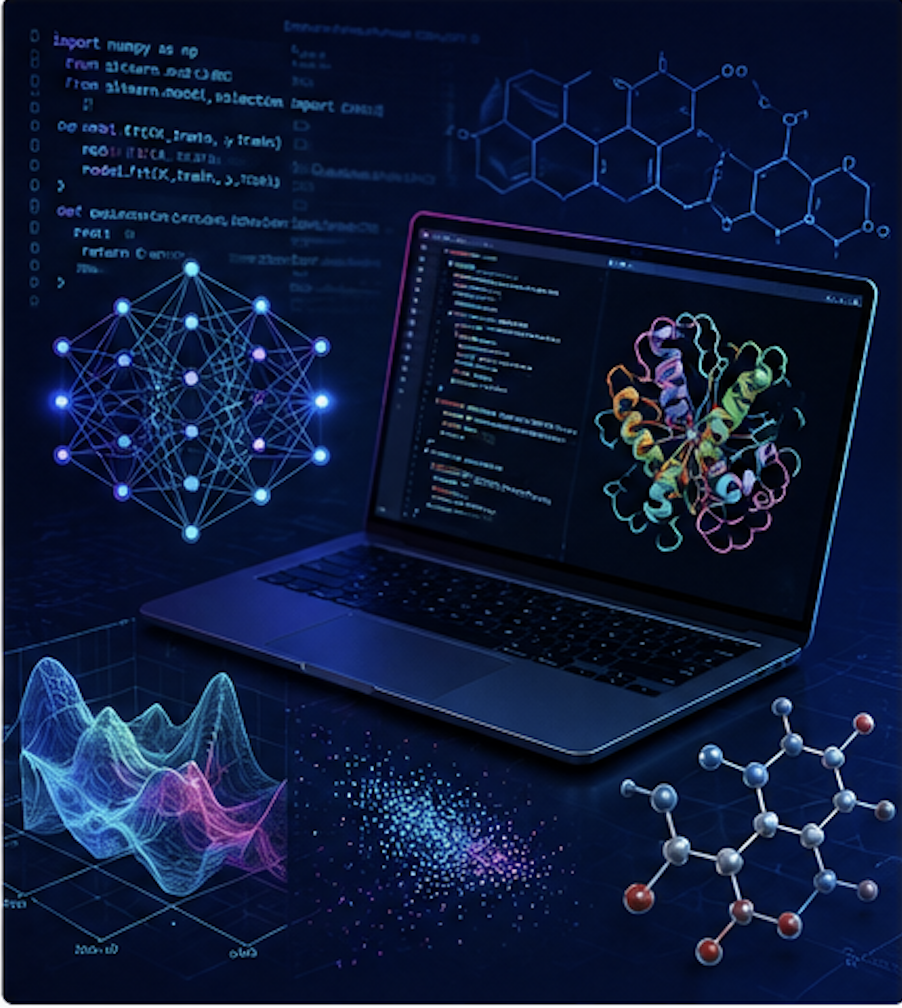
ModelComputational BiochemistryModel, integrate, and interpret systems

Research pillar 01

Omics & Systems Biology

From molecular measurements to biological systems

Proteins and metabolites provide complementary views of biological state. We use quantitative proteomics, metabolomics, and multi-omics approaches to characterize how these molecular systems change in disease, during cellular adaptation, and following exposure to therapeutic agents or other chemical perturbations.

Our objective is not simply to identify molecules whose abundance changes. Differential molecular profiles are interpreted in terms of biochemical pathways, interaction networks, cellular processes, and coordinated biological responses. This systems-level perspective places individual molecular observations within the broader organization of the cell or organism.

High-resolution mass spectrometry provides much of the experimental foundation for these studies, while statistical analysis, bioinformatics, pathway analysis, and network biology provide the framework required to convert molecular measurements into biological interpretation.

Quantitative proteomics

We use mass-spectrometry-based proteomics to characterize changes in protein abundance, protein composition, and regulatory processes across biological conditions. Depending on the biological question, these analyses range from broad proteome profiling to focused investigation of specific pathways, protein families, or post-translational modifications.

Applications include disease-associated proteome changes, drug and xenobiotic perturbation, antimicrobial response, cancer cell biology, clinical molecular characterization, and protein biomarkers.

Metabolomics

Metabolomics provides a complementary view of cellular and systemic physiology by directly measuring changes in small molecules associated with metabolic activity. We use metabolomic approaches to investigate altered pathways, cellular adaptation, metabolic consequences of drug exposure, and interactions between metabolism and broader molecular responses.

Multi-omics integration

Proteomic and metabolomic datasets describe different layers of the same biological system. We investigate strategies for integrating these layers to identify coordinated molecular responses, connect changes in enzymes with changes in metabolites, and reconstruct broader alterations in biochemical pathways and cellular functions.

Pathways and molecular networks

Molecular changes are interpreted through pathway enrichment, protein interaction networks, metabolic pathways, functional annotation, and systems-level modelling. These approaches help distinguish isolated molecular effects from coordinated biological programmes.

Biomarkers and molecular signatures

We investigate individual biomarkers as well as multivariate molecular signatures associated with disease states, biological responses, or therapeutic effects. These signatures can provide both practical discriminatory information and insight into the underlying biological mechanisms.

Proteomics · Metabolomics · Multi-omics · Quantitative mass spectrometry · Biomarkers · Pathway analysis · Network biology · Systems biology

Back to research overview ↑

Research pillar 02

Molecular Mechanisms of Disease & Drug Action

Understanding how biological systems respond to disease and chemical perturbation

Disease and pharmacological response emerge from alterations in interconnected molecular processes rather than from isolated changes in individual proteins or metabolites. We investigate how these processes are reorganized in disease and following exposure to therapeutic agents, xenobiotics, and other chemical perturbations.

Experimental biochemistry, cell biology, omics, molecular interaction studies, and computational analysis are combined to determine how molecular perturbations propagate through biological systems. Particular attention is given to adaptive responses, altered metabolism, cellular stress, signalling, protein regulation, and molecular interactions associated with therapeutic efficacy or toxicity.

Although the biological systems investigated are diverse, the underlying question is consistent: how does a molecular perturbation produce a measurable biological response, and which mechanisms determine adaptation, dysfunction, resistance, or therapeutic outcome?

Cancer biology and anticancer agents

We investigate how cancer cells respond to therapeutic compounds and experimental perturbations at the molecular and systems levels. Proteomic, metabolomic, biochemical, and computational approaches are used to identify altered pathways, cellular stress responses, metabolic reprogramming, and mechanisms associated with drug activity.

Antimicrobial resistance and MRSA

Antimicrobial resistance provides a clear example of biological adaptation to chemical pressure. We investigate how bacterial cells, including methicillin-resistant Staphylococcus aureus, reorganize their proteome, metabolism, transport systems, stress responses, and regulatory pathways following antibiotic exposure.

These studies aim to distinguish direct antibiotic effects from adaptive responses and identify molecular processes that may contribute to resistance, tolerance, or therapeutic sensitization.

Neurobiology and neurodegeneration

We investigate molecular processes relevant to neuronal function, neurobiological disease, and pharmacological modulation of neuronal systems. Omics and biochemical approaches are used to characterize changes associated with neuronal state, neurodegenerative processes, and exposure to therapeutic compounds.

Adverse drug reactions

Individual responses to therapeutic agents may result from differences in metabolism, molecular targets, compensatory pathways, and broader physiological context. We investigate molecular signatures and mechanisms associated with adverse drug responses, combining omics data with biochemical and pharmacological interpretation.

Xenobiotic response and mechanisms of drug action

Therapeutic agents and other xenobiotics can be considered controlled perturbations of biological systems. By following molecular responses across proteins, metabolites, pathways, and molecular interactions, we aim to understand both intended pharmacological effects and secondary adaptive or toxic responses.

From perturbation to mechanism

Across these biological systems, the central objective is to move from lists of altered molecules toward mechanistic explanations. Molecular measurements are integrated with biochemical pathways, interaction networks, structural information, and experimental context to reconstruct the processes that connect exposure with biological outcome.

Cancer · Antimicrobial resistance · MRSA · Neurobiology · Neurodegeneration · Adverse drug reactions · Xenobiotic response · Drug mechanisms

Back to research overview ↑

Research pillar 03

Computational & Molecular Biochemistry

Connecting molecular structure, interactions, and biological data

Many biological mechanisms can only be understood by connecting molecular-scale interactions with systems-level observations. We use computational biochemistry and bioinformatics to investigate this connection, combining molecular modelling with computational analysis of proteomic, metabolomic, and other biological data.

These approaches span multiple scales. At the molecular level, structural modelling and molecular simulations help explain interactions between proteins, metabolites, drugs, and other small molecules. At the systems level, computational workflows are used to process, integrate, and interpret high-dimensional biological datasets.

Increasingly, machine-learning and artificial-intelligence methods provide additional ways to represent complex molecular information, identify patterns in biological data, and integrate knowledge across molecular scales.

Bioinformatics and computational omics

We develop and apply computational workflows for quantitative proteomics, metabolomics, annotation, statistical analysis, pathway enrichment, network analysis, visualization, and integration of heterogeneous biological datasets.

Workflows are developed when existing tools do not adequately address a specific biological question.

Molecular modelling

Structural and molecular modelling approaches are used to investigate the molecular basis of interactions between proteins, metabolites, therapeutic agents, and other ligands. These studies provide hypotheses that can be compared with experimental biochemical and omics observations.

Molecular dynamics

Molecular dynamics simulations are used to investigate conformational behaviour, molecular recognition, stability, and interaction mechanisms that cannot be fully captured by static structural models.

Protein–ligand interactions

Experimental and computational analysis of protein–ligand interactions provides a molecular-scale view of drug action and biochemical regulation. Docking, molecular simulation, binding analysis, spectroscopy, and complementary biochemical measurements can be integrated to characterize interaction mechanisms.

Computational systems biology

Computational approaches connect individual molecular changes with pathways, networks, and broader biological states. Particular emphasis is placed on integrating quantitative experimental measurements with prior biochemical knowledge rather than treating computational analysis as a purely statistical exercise.

Artificial intelligence and data-driven molecular biology

Machine learning and artificial intelligence provide new methods for representing proteins, metabolites, molecular structures, and complex biological states. We are interested particularly in approaches that complement experimental molecular biology and omics by improving data integration, biological interpretation, and the generation of mechanistic hypotheses.

Emerging directions include representation learning for molecular and omics data, biological foundation models, AI-assisted interpretation of proteomic and metabolomic datasets, and computational descriptions of biological states derived from high-dimensional molecular measurements.

Bioinformatics · Computational biochemistry · Molecular modelling · Molecular dynamics · Protein–ligand interactions · Computational omics · Machine learning · Artificial intelligence

Back to research overview ↑